
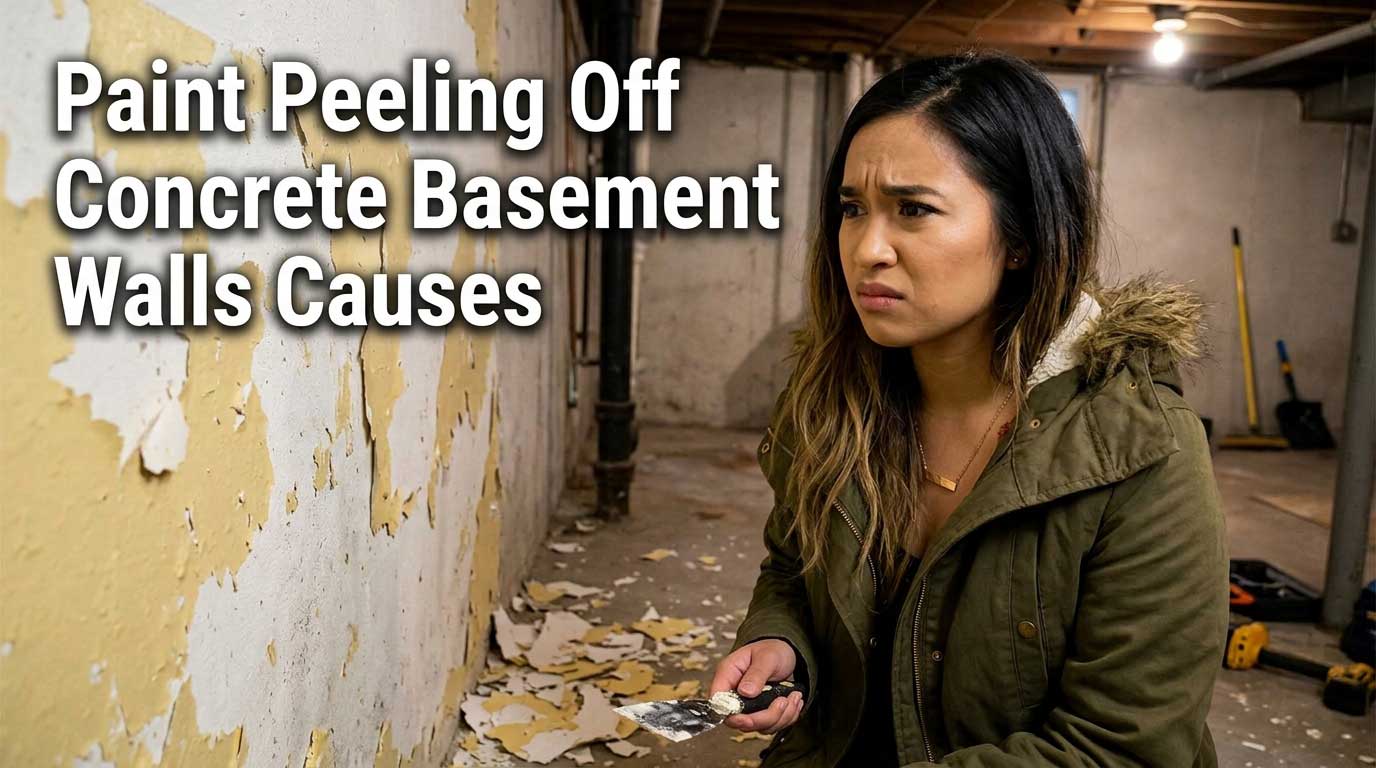
It was a rainy Tuesday afternoon last month. I walked down my basement stairs to grab an old photo album. I needed it for a family dinner. As I flipped on the light, a damp, earthy smell hit my nose. It smelled like wet dirt and old socks.
I looked at my back wall and just froze. My jaw literally dropped. Large, crusty yellow flakes covered the floor. The wall looked like it had a terrible sunburn. Huge strips of paint hung down like dead skin. I just stood there and rubbed my temples. I felt a huge headache coming on. My wallet basically sobbed in my pocket. If you are seeing this mess right now, you know this exact frustration. You have to find the real paint peeling off concrete basement walls causes to stop the madness. Here is how I fought this battle and finally won.
Table of Contents
The Secret Sponge Hiding in Your House
Concrete block feels very solid. If you hit it, your hand hurts. But it is not a solid rock at all.
Concrete is actually a massive, gray sponge. It is full of tiny, hidden holes. These tiny holes let air and liquid pass right through the thick block.
When I bought my home, the lower level looked great. The walls were a bright, clean white. I thought the room was perfectly dry. I dragged my nice couch down there.
Then the heavy rains came. I watched that clean white wall bubble up in just a few days. The surface cracked. The white chips fell to the floor with a soft, gritty sound. The old owners just hid the problem. They did not fix it. I had to learn why this happens.
The Top Paint Peeling Off Concrete Basement Walls Causes
You cannot fix a problem if you do not know the source. I put on my detective hat. I did a lot of reading. I found four big reasons why this mess happens.
Heavy Water Pushing From the Dirt
Outside your house, tons of dirt surround your foundation. When it rains, that dirt gets soaked.
Wet dirt is incredibly heavy. It pushes very hard against your foundation block. This is called water pressure. The heavy pressure forces ground water right into the tiny holes of your concrete.
The water slowly creeps through the thick block. When it reaches your inside room, it hits the back of your paint. The paint acts like a cheap plastic bag. The water builds up. A bubble forms. Finally, the bubble pops, and the color falls off.
The Strange White Salt Dust
I touched the bare wall where the flakes fell off. A thick, chalky white powder covered my fingers. It felt gritty.
This powder is called efflorescence. It is just natural salt. The water brings this salt out of the cement as it travels through the block.
When the wet spot dries inside your warm room, the salt stays behind. These salt crystals actually grow. They push hard on the back of your wall color. They push so hard that the color just pops off.
Wet Air and Sweating Blocks
Sometimes the dirt outside is totally dry. But your walls still peel. Why? Because of your indoor air.
Underground rooms are naturally cold. If warm, sticky summer air gets down there, it hits those cold blocks.
The warm air drops its water right on the cold surface. It looks just like a sweaty glass of ice water on a hot day. The wall stays wet. Normal house paint gets mushy and weak when it stays wet. It just lets go and slides down the wall.
Picking the Wrong Bucket at the Store
This is a very common mistake. I made it myself. I used the wrong supplies.
Most people use leftover living room latex on their bare cement block. Standard latex is made for dry drywall. It is not made for a cold, damp, rough cellar.
Latex traps wetness. It blocks the air. You must use a special coating that breathes. If the wall cannot breathe, it will always fail.
My First Fast Repair Was a Joke
I want to tell you about my first mistake. It is highly embarrassing. I tried a lazy fix.
I grabbed a metal scraper on a Saturday morning. I scraped off the loose chips. The loud, scratching noise echoed in the empty room. It hurt my ears.
I swept the floor. I bought a fresh bucket of cheap latex. I rolled it right over the ugly spots. It took me two hours. I felt very smart and very proud.
Three weeks later, a huge storm rolled through our town. I went downstairs. The exact same spots were completely ruined again. The new layer fell off in massive, wet sheets. I wasted my Saturday. I wasted forty bucks. I learned a hard lesson that day.
Stop the Outside Water First
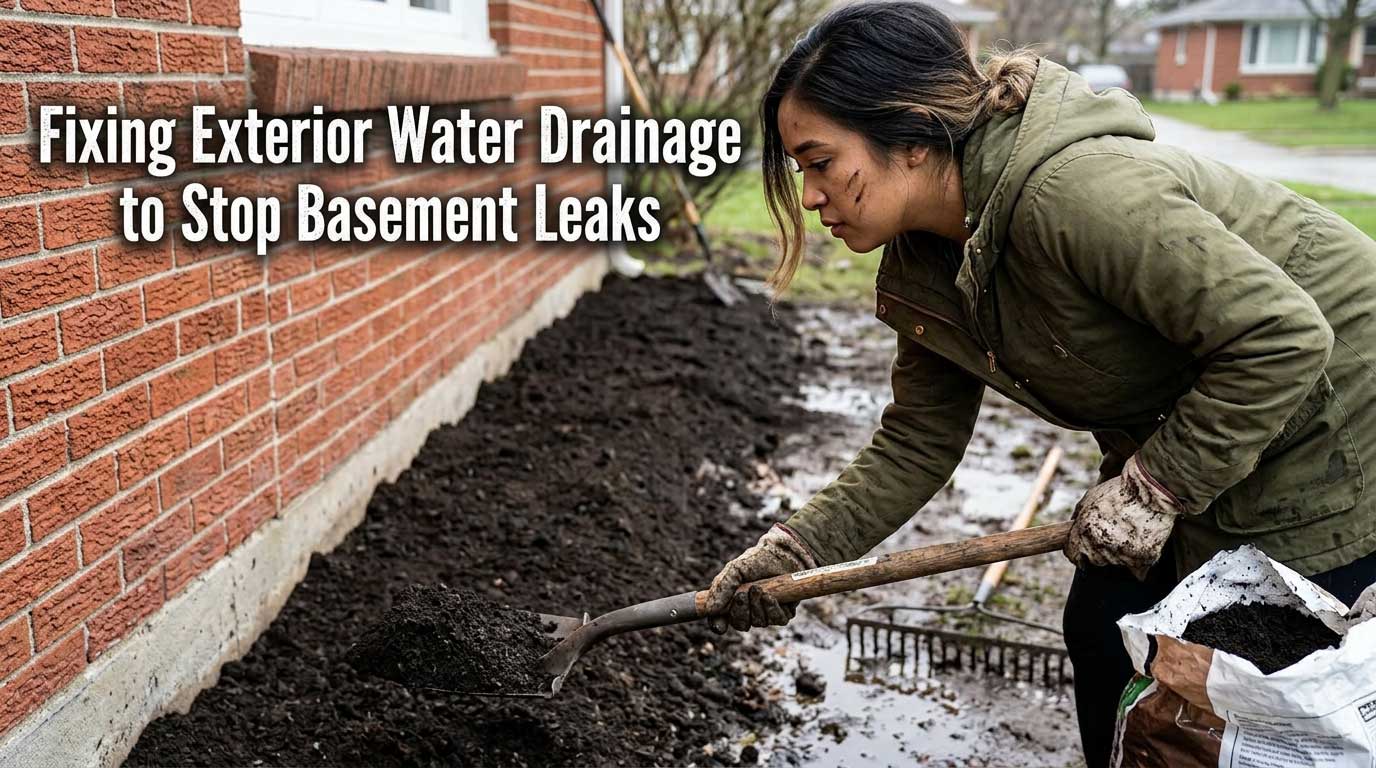
You cannot win a fight against mother nature. You have to stop the rain before it hits the block. Your real Repair starts in the front yard.
Check Your Roof Gutters in the Rain
The next time it rained hard, I grabbed a big umbrella. I walked outside and looked up at my roof.
My gutters were a total disaster. Water spilled over the sides like a loud waterfall. It splashed right next to my foundation. All that water went straight down into the dirt next to my house.
When the sun came out, I got a tall ladder. I scooped out handfuls of black, slimy leaves. I added long plastic tubes to my downspouts. Now, the rain dumps ten feet away from my brick. That one simple fix changed everything.
Push the Dirt Away From Your House
I looked closely at my front flower beds. The dirt sloped backward. It tilted right toward my house.
Every time it rained, a deep puddle formed against the front wall. The puddle just sat there. It slowly soaked deep into my cellar.
I drove to the garden center. I bought ten heavy bags of fresh topsoil. My back ached as I hauled them around. I packed the fresh dirt against the house. I made a smooth slope pointing down toward the front lawn. Now, the rain runs safely away.
Fixing the Inside Air and Gear
After I fixed the yard, I tackled the inside air. The room still felt sticky. It smelled like an old, wet dog.
I bought a huge, loud dehumidifier. This machine is a lifesaver. It sucks the sticky water right out of the cold air.
You must keep up with regular Maintenance on these machines. You have to pull out the little plastic air filter and wash the gray dust off. If you do not clean it, the motor gets too hot.
Last winter, my machine made a horrible grinding sound. Then it just quit. I felt a spike of panic. I did not want to buy a new one.
I unplugged it and did some basic Troubleshooting. I opened the back plastic panel. The fan motor was totally burnt out. It smelled like hot plastic.
Instead of trashing it, I looked online for Replacement Parts. I found a small fan motor for fifteen dollars. I ordered it. I swapped the wires myself with a small screwdriver. The easy Repair took ten minutes. The machine fired right up. Fixing your own gear saves so much cash.
The Right Way to Prep the Wall
Now the dirt was dry. The air was dry. It was time to fix the ugly wall for good. This is the hardest part.
The Clear Plastic Wrap Test
How do you know the block is truly dry? You do a simple test.
I cut a square of clear kitchen wrap. I used strong silver duct tape to stick it to the bare block. I sealed all four sides tight. I pressed the tape down hard with my thumb.
I left it alone for two days. When I checked it, the plastic was perfectly dry. There were no water drops on the inside. There were no drops on the outside. The room was finally ready.
Hard Scraping and Serious Scrubbing
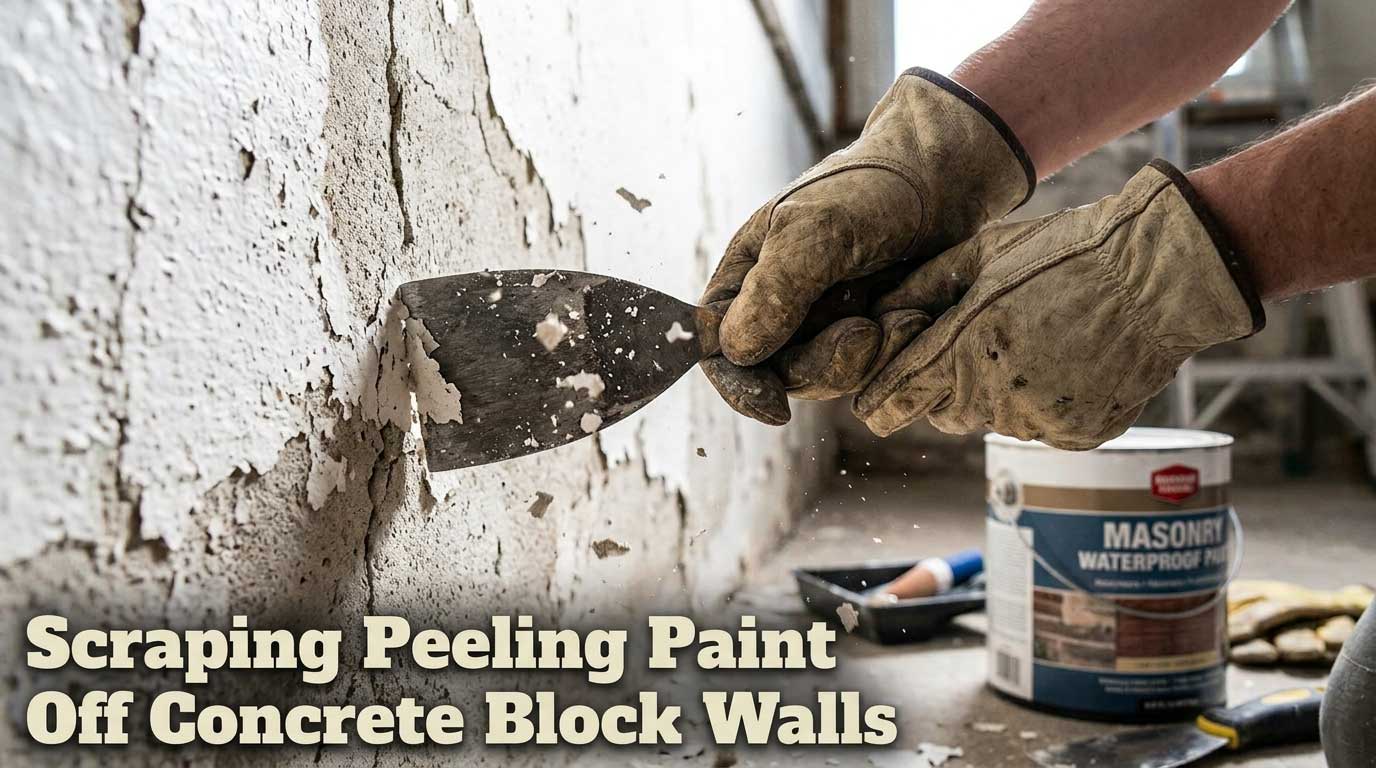
I put on safety glasses and leather work gloves. I grabbed a sharp metal scraper.
I pushed hard against the wall. The old flakes flew into the air like snow. It was a serious arm workout. Sweat dripped down my nose.
Sometimes your scraper gets dull quickly. You should always keep Replacement Parts nearby. I bought extra metal blades for my scraper tool. A sharp blade makes a nasty job go much faster.
After the scraping, I did a deep Cleaning. I scrubbed the wall with warm water and a stiff nylon brush. I used a strong acid cleaner to melt away that chalky white salt. You have to wash away the salt. If you skip the Cleaning, your expensive new paint will fall right off.
Slapping on the Thick Masonry Coating
You cannot use normal paint. You must buy real masonry waterproofer.
I opened the heavy metal can. The smell was sharp and strong. I stirred it with a wooden stick. The coating was insanely thick. It looked and felt like thick pancake batter.
I used a stiff, wide brush for the first coat. I pushed the thick liquid deep into every tiny hole in the block. You have to scrub it into the pores. My wrist hurt after an hour.
I let it dry over night. The next day, I rolled on a second heavy coat. It formed a thick, tough skin. It bonded perfectly with the rough block. It looked brand new.
Keep Up With Simple Care
Your basement will never take care of itself. You have to watch it closely.
Do regular Maintenance on your yard. Clean those messy gutters every single autumn. Rake the wet leaves away from your foundation block.
Check your floor sump pump if you have one. Dump a bucket of tap water into the dark pit. Make sure the pump clicks on fast.
If the pump stays silent, do some quick Troubleshooting. Jiggle the float switch. See if it is stuck on a rock. Check the power cord.
If the little plastic switch is dead, do not panic. You can easily order cheap Replacement Parts for most standard pumps. Swapping a switch is very easy. A flooded room is a nightmare. A ten-dollar switch is a blessing.
Quick Answers to Your Basement Problems
Can I just paint over the loose chips? No way. The loose chips have no grip. Your new layer will just fall off with the old stuff. You must scrape the block completely bare.
How do I clean that white salt powder? You need an acidic liquid to melt the salt crystals. A mix of cheap white vinegar and warm water works great for small spots. Scrub it hard with a brush.
Will a big fan stop my walls from peeling? A fan just moves wet air around the room. You need a real dehumidifier to actually pull the wetness out of the air. Keep the air very dry.
Is it safe to breathe near the falling flakes? The dry flakes are just messy trash. But the wet blocks behind them can grow black mold. Mold is very bad for your lungs. Fix the damp spots fast.
Final Thoughts on This Mess
Dealing with ugly, flaky basement walls is a giant headache. It ruins your mood. It makes your house feel dirty and cheap. I spent too many weekends trying to find a fast, easy shortcut. Shortcuts do not exist down there. Water will always win a fair fight.
Learning the actual paint peeling off concrete basement walls causes changed my life. Once I pushed the rain away outside, dried the air inside, and used the correct thick coatings, the nightmare ended. Do the hard prep work with your own two hands. Clean the block until it shines. You will never have to sweep up those nasty yellow flakes again.